Preview

This is your website preview.

Currently it only shows your basic business info. Start adding relevant business details such as description, images and products or services to gain your customers attention by using Boost 360 android app / iOS App / web portal.

UNITEDCOOLINGTOWER 67ac61613356851fbed0b5d7 Products https://www.unitedcoolingtower.in
cooling towers
United Cooling Tower is one of leading manufacturer of FRP induced draft counter flow cooling tower in single and multi-cell. We also Export our specialised Cooling Towers in Dubai, Iran, Sri Lanka, Bangladesh, South Africa, Yemen and many more abroad countries.United Cooling Tower has a range of Cooling Towers and accessories … FRP Cooling Towers, Pultruded Cooling Towers, Timber Cooling Towers, Cooling Tower Fans, Cooling Tower Fills,A cooling tower is a device that releases waste heat into the environment by lowering the temperature of a coolant stream, often a water stream. In order to reduce process heat and get the working fluid close to the temperature of wet-bulb air, cooling towers can either employ the evaporation of water or, in the case of dry cooling towers, only rely on air and radiators.Cooling towers come in various shapes and sizes, but they typically consist of a tall cylindrical or rectangular tower structure. The tower is usually made of concrete, steel, or fiberglass, and it contains several components, includingFill Material : It provides a large surface area for water to spread out and maximize evaporation.Fan or Air Blower : It draws air through the tower, facilitating the evaporation process by removing the moist air and bringing in fresh air.Water Distribution System : It distributes the hot water evenly over the fill material, promoting efficient cooling and evaporation.Drift Eliminators : These devices help to capture water droplets and prevent them from escaping the cooling tower with the exhaust air.Water Basin : It collects the cooled water at the bottom of the tower and supplies it back to the process or equipment.Cooling towers are designed to operate efficiently and economically, balancing the need for effective heat removal while conserving water and energy. They are an essential component of many industrial processes, as they help prevent overheating and maintain optimal operating conditions for equipment and machinery.Cooling Tower applicationsCooling the circulating water used in oil refineriesPetrochemical and other chemical plantsThermal Power stationsNuclear Power stationsHVAC systems for cooling buildingsHeating, ventilation, and air conditioning (HVAC)Cooling towers are also used in HVAC systems that have multiple water source heat pumps that share a common piping water loop. In this type of system, the water circulating inside the water loop removes heat from the condenser of the heat pumps whenever the heat pumps are working in the cooling mode, then the externally mounted cooling tower is used to remove heat from the water loop and reject it to the atmosphere. By contrast, when the heat pumps are working in heating mode, the condensers draw heat out of the loop water and reject it into the space to be heated. When the water loop is being used primarily to supply heat to the building, the cooling tower is normally shut down (and may be drained or winterized to prevent freeze damage), and heat is supplied by other means, usually from separate boilers.Hyperboloid cooling towers are often associated with nuclear power plants, although they are also used in some coal-fired plants and to some extent in some large chemical and other industrial plants. Although these large towers are very prominent, the vast majority of cooling towers are much smaller, including many units installed on or near buildings to discharge heat from air conditioning. Cooling towers are also often thought to emit smoke or harmful fumes by the general public, when in reality the emissions from those towers mostly do not contribute to carbon footprint, and consist solely of water vapor.In coal-fired power plants, however, the smoke pipes are often introduced directly into the cooling towers so that these indeed serve also as a chimney.Nuclear Power stationsCooling towers are an essential component of many nuclear power stations. Their primary function is to dissipate waste heat generated during the operation of the power plant, particularly from the condenser system.Nuclear power plants use steam turbines to generate electricity. The steam is produced by heating water in the reactor core, and after passing through the turbine, it needs to be condensed back into water for reuse. This condensation process releases a significant amount of heat, which needs to be removed to maintain the efficiency and safe operation of the power plant.Thermal Power stationsCooling towers are an essential component of thermal power stations. They are large, cylindrical structures that help dissipate excess heat generated during the electricity generation process. The primary purpose of a cooling tower is to remove heat from the cooling water that circulates through various parts of the power plant.Thermal power stations, such as coal-fired or nuclear power plants, generate electricity by converting heat energy into electrical energy. During this process, a significant amount of heat is produced, which needs to be continuously removed to prevent damage to equipment and ensure optimal operation.Working of Cooling tower in a thermal power stationHot water from the power plant's condenser or other heat sources is pumped into the cooling tower.The cooling tower sprays the hot water onto a distribution deck, creating a fine water spray or droplets.Simultaneously, a fan or fans located at the top of the tower draw air from the bottom and force it upward.As the water droplets fall through the tower, they come into contact with the upward-moving air, which causes evaporation.The evaporation process absorbs heat from the water, effectively lowering its temperature.The cooled water collects at the bottom of the tower and is recirculated back to the power plant for reuse in the condenser or other cooling processes.Some cooling towers use a natural draft, where the hot air rises naturally due to the temperature difference, while others rely on mechanical draft systems with fans to create airflow.Petrochemical and Chemical plantsCooling towers play a crucial role in the operations of petrochemical and chemical plants by providing a reliable and efficient method for removing heat from industrial processes. These towers are used to dissipate the excess heat generated during various stages of production, ensuring optimal operating conditions for equipment and preventing overheating.Functioning of Cooling tower in a Petrochemical or Chemical plantHeat Exchange : The cooling tower receives hot water or process fluids from the plant's equipment, such as heat exchangers, condensers, or reactors. This hot water is usually a byproduct of chemical reactions or thermal processes.Distribution : The hot water is distributed at the top of the cooling tower through a system of pipes or distribution nozzles. The water flows downward in a controlled manner, either as a spray or in a series of cascading trays.Contact with Air : As the hot water descends through the tower, it comes into contact with a flow of ambient air. The air, typically drawn in by fans located at the base or top of the tower, interacts with the falling water, absorbing its heat through evaporation and convection.Heat Dissipation : The heat transfer process causes a portion of the water to evaporate, effectively removing heat from the remaining water. This evaporation results in the release of latent heat, which is carried away by the air passing through the tower.Cooling and Collection : At the bottom of the cooling tower, cooled water collects in a basin or sump. This cooled water is then pumped back into the plant's equipment for reuse in the industrial processes. Any excess water may undergo further treatment or discharged according to environmental regulations.Air Discharge : The heated air, now saturated with moisture, exits the cooling tower through louvers or drift eliminators located near the top. These components prevent water droplets from leaving the tower with the air stream, reducing water loss and ensuring compliance with environmental standards.Regular maintenance and water treatment are essential to prevent issues like scaling, corrosion, and microbial growth, which can negatively impact the tower's performance.
Cooling Towers
VIEW DETAILS
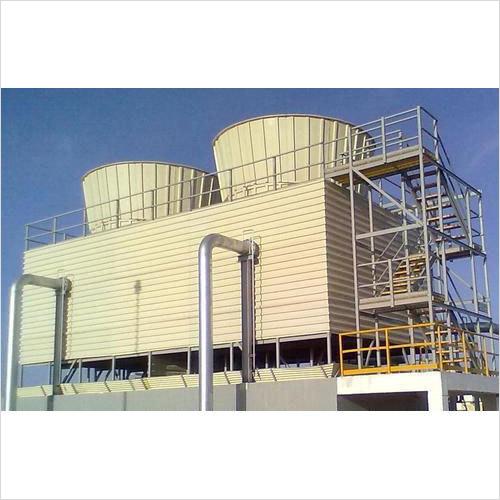
United Cooling Towers is a leading name in the industry as a prominent Manufacturer, Exporter, and Supplier of state-of-the-art FRP Cooling Towers. Our innovative cooling tower solutions are designed to meet the diverse needs of industries worldwide, ensuring efficient heat dissipation and optimal performance..Unique Features of FRP Cooling TowersAdvanced FRP Technology : Our cooling towers are constructed using advanced Fiber Reinforced Plastic (FRP) materials, ensuring durability, corrosion resistance, and longevity. This makes them suitable for a wide range of industrial applications.Customized Design : United Cooling Towers takes pride in offering customized cooling tower solutions tailored to specific client requirements. Our team of experts collaborates closely with clients to design cooling towers that seamlessly integrate into their operations.Energy-Efficient Design : Our FRP Cooling Towers are designed with a focus on energy efficiency, helping clients reduce their carbon footprint and operational costs. The innovative design ensures optimal heat dissipation with minimal energy consumption.Low Maintenance : The use of high-quality FRP materials makes our cooling towers low-maintenance. They resist corrosion, rust, and deterioration, resulting in a longer lifespan and reduced maintenance costs for our clients.Environmental Sustainability : United Cooling Towers is committed to environmental sustainability. Our cooling towers are designed to minimize water consumption and maximize efficiency, contributing to eco-friendly industrial practices.Global Export Reach : As an Exporter, we take pride in our global reach. Our FRP Cooling Towers have been successfully exported to various countries, earning us a reputation for reliability and excellence on the international stage.Stringent Quality Control : We adhere to stringent quality control measures throughout the manufacturing process, ensuring that each cooling tower meets the highest industry standards.Responsive Customer Support : United Cooling Towers provides exceptional customer support, offering timely assistance, maintenance services, and technical guidance to ensure the seamless operation of our cooling towers.In conclusion, United Cooling Towers stands out as a trusted source for FRP Cooling Towers, combining cutting-edge technology, customization, energy efficiency, and global expertise to meet the diverse needs of industries worldwide.
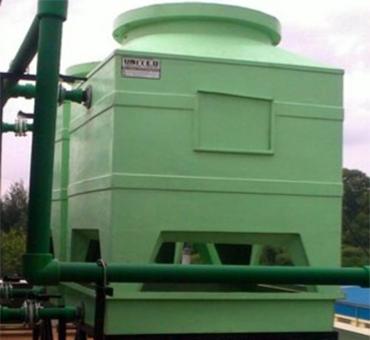
FRP Cooling Towers
VIEW DETAILS
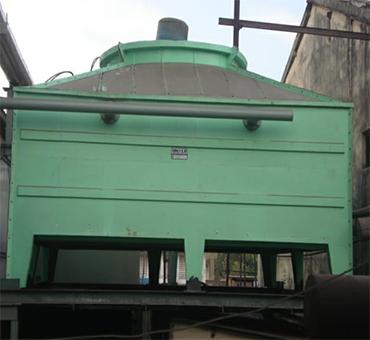
We, at UNITED COOLING TOWERS are most popular suppliers of PULTRUDED COOLING TOWERS. We can design these PULTRUDED COOLING TOWERS at various heights so as to handle water flow with high rate. As excellent quality of raw material is used our cooling towers are corrosion free and rust free.Pultruded cooling towers are a type of cooling tower constructed using pultruded fiberglass reinforced plastic (FRP) materials. Pultrusion is a manufacturing process where continuous fiberglass reinforcements are saturated with a polymer resin and then pulled through a heated die to form the desired shape.Pultruded FRP materials offer several advantages over traditional materials like wood, concrete, or steel.Some key benefits of pultruded cooling towers includeCorrosion resistance : Pultruded FRP is highly resistant to corrosion caused by chemicals, moisture, and UV exposure, making it well-suited for cooling tower applications. Unlike steel or concrete, which can deteriorate over time due to corrosion, pultruded FRP has excellent durability.Lightweight : Pultruded FRP is significantly lighter than materials like steel or concrete, which simplifies transportation, installation, and maintenance processes. The lightweight nature of pultruded cooling towers can also reduce structural load requirements.High strength-to-weight ratio : Despite being lightweight, pultruded FRP exhibits high strength and stiffness. This characteristic allows for the construction of structurally sound cooling towers capable of withstanding wind loads and other environmental stresses.Design flexibility : Pultrusion allows for the creation of complex and customized shapes, providing designers with more flexibility in optimizing the cooling tower's performance. The ability to incorporate aerodynamic features, such as louvers and baffles, enhances airflow and heat dissipation efficiency.Low maintenance : Pultruded FRP materials require minimal maintenance compared to traditional materials. They are resistant to rot, decay, and insect damage, reducing the need for frequent inspections and repairs.Energy efficiency : Pultruded cooling towers can be designed to maximize energy efficiency by incorporating features like efficient fan systems, drift eliminators, and optimal airflow patterns. This can result in lower energy consumption and operational costs.Application industries for Pultruded Cooling TowersPower Plants : Pultruded cooling towers are extensively used in power plants to cool down the hot water generated during the electricity generation process. These towers efficiently remove heat from the water, allowing it to be reused or discharged at lower temperatures.Petrochemical Industry : Pultruded cooling towers are employed in petrochemical plants to cool down the process fluids used in refining and chemical manufacturing. They help maintain optimal temperatures for efficient operation and ensure the safety of equipment and processes.HVAC (Heating, Ventilation, and Air Conditioning) : Pultruded cooling towers are used in commercial and industrial HVAC systems to cool down the water or refrigerant used for air conditioning. They play a crucial role in maintaining comfortable indoor temperatures and ensuring efficient heat exchange.Steel Industry : In steel manufacturing, pultruded cooling towers are utilized to cool down various processes, such as cooling water used in steel mills, hot rolling, and continuous casting. These towers help control the temperature of the equipment and ensure the quality of the final steel products.Chemical Industry : Pultruded cooling towers are employed in chemical plants for cooling processes that involve exothermic reactions or require temperature control. They provide efficient cooling solutions for chemical reactors, condensers, and other equipment used in the industry.Refineries : Refineries require cooling towers to cool down the various process streams involved in crude oil refining. Pultruded cooling towers play a vital role in maintaining the desired temperatures for efficient refining operations and preventing equipment damage.Food and Beverage Industry : Pultruded cooling towers are utilized in the food and beverage industry for cooling processes, such as pasteurization, fermentation, and refrigeration. These towers help maintain food safety standards, ensure product quality, and increase production efficiency.Pharmaceutical Industry : Pharmaceutical manufacturing processes often require precise temperature control. Pultruded cooling towers are used in pharmaceutical plants to cool down equipment, reactors, and heat exchangers involved in drug production and formulation.Data Centres : Data centres generate substantial heat due to the continuous operation of computer servers. Pultruded cooling towers are employed to dissipate this heat and maintain the optimal operating temperatures for the servers, ensuring their longevity and reliability.
Pultruded Cooling Towers
VIEW DETAILS
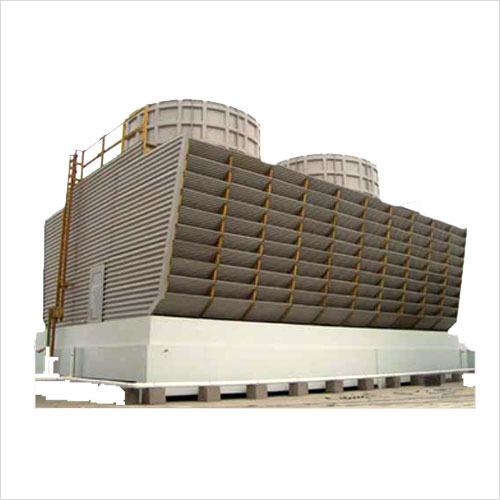
Timber cooling towers, also known as wooden cooling towers, are a type of heat exchange system used in industrial processes for removing waste heat from power plants, refineries, and other large-scale facilities. These towers are constructed primarily using wood and provide a natural and sustainable cooling solution.Features of Timber Cooling TowersDesign and Construction : Timber cooling towers are typically made of treated wood, such as cedar or pine, which is resistant to decay, rot, and water damage. The tower consists of a framework of wooden beams or columns that support a series of wooden slats or louvers. These slats allow air to flow through the tower and aid in the cooling process.Cooling Process : The cooling process in timber cooling towers involves the circulation of hot water from an industrial process, such as a power plant, through the tower. As the hot water flows over the wooden slats, it comes into contact with ambient air. The water evaporates and cools down through the natural process of evaporation. The cooled water is then collected at the bottom of the tower and recirculated back into the industrial process.Advantages of Timber Cooling TowersEnvironmental Sustainability : The use of wood as the primary construction material makes timber cooling towers more environmentally friendly compared to towers made of steel or concrete.Cost-Effectiveness : Wooden construction is generally less expensive than other materials, reducing the initial construction costs of the tower.Thermal Efficiency : The natural evaporation process in timber cooling towers provides efficient cooling and effective heat transfer, making them suitable for various industrial applications.Noise Reduction : The use of wood as a construction material helps to absorb and dampen noise, resulting in quieter operation compared to other types of cooling towers.Aesthetics : Timber cooling towers can blend well with natural surroundings and architectural designs, offering a visually pleasing appearance.Maintenance and Durability : Proper maintenance is crucial for the longevity of timber cooling towers. Regular inspections, treating the wood with protective coatings, and monitoring for any signs of decay or damage are essential to ensure their efficient operation. However, timber cooling towers may require more frequent maintenance and have a shorter lifespan compared to towers made of materials like concrete or fiberglass.Timber Cooling Towers application industriesTimber cooling towers, also known as wooden cooling towers, are primarily used in industries where cooling of water or process fluids is required. While they were commonly used in the past, the industry has shifted towards more modern materials such as concrete and fiberglass for cooling tower construction due to their durability and longevity. Nevertheless, timber cooling towers are still found in certain industries, particularly in applications where corrosion resistance is not a significant concern.Here are a few industries where timber cooling towers have been usedPower Generation : Timber cooling towers have been used in power plants, especially in older facilities. They help dissipate heat generated during power generation processes, such as in thermal power plants, where steam turbines are employed.Petrochemical Industry : Some petrochemical plants may still have timber cooling towers in use. They aid in cooling various processes involved in the production of chemicals and petroleum products.Pulp and Paper Industry : Timber cooling towers have historically been used in the pulp and paper industry to cool water and process fluids used in paper manufacturing and other related processes.Steel Mills : In certain steel mills, timber cooling towers have been utilized for cooling purposes. They assist in cooling water used in steel production, such as in cooling down equipment or reducing the temperature of wastewater.Textile Industry : Textile manufacturing facilities have used timber cooling towers in the past to cool down water used in textile dyeing and other processes.Food and Beverage Industry : Some food processing and beverage production facilities have employed timber cooling towers for cooling purposes. However, modern food processing plants typically prefer other materials due to stricter hygiene standards and the need for corrosion resistance.
Timber Cooling Towers
VIEW DETAILS

Filter using tags

Timber Cooling TowersExporter of Timber Cooling TowersManufacturer of Timber Cooling TowersSupplier of Timber Cooling TowersPultruded Cooling TowersSupplier of Pultruded Cooling TowersManufacturer of Pultruded Cooling TowersExporter of Pultruded Cooling TowersHoneycomb PVC FillsManufacturer of Honeycomb PVC FillsExporter of Honeycomb PVC FillsSupplier of Honeycomb PVC FillsCooling Tower PVC FillsManufacturer of Cooling Tower PVC FillsSupplier of Cooling Tower PVC FillsExporter of Cooling Tower PVC FillsCooling Tower PP FansManufacturer of Cooling Tower PP FansSupplier of Cooling Tower PP FansExporter of Cooling Tower PP FansFRP Cooling TowersManufacturer of FRP Cooling TowersSupplier of FRP Cooling TowersExporter of FRP Cooling TowersCooling TowerCooling TowersManufacturer of Cooling TowersExporter of Cooling TowersSupplier of Cooling Towers

Have any question or need any business consultation?

Have any question or need any business consultation?

Contact Us