
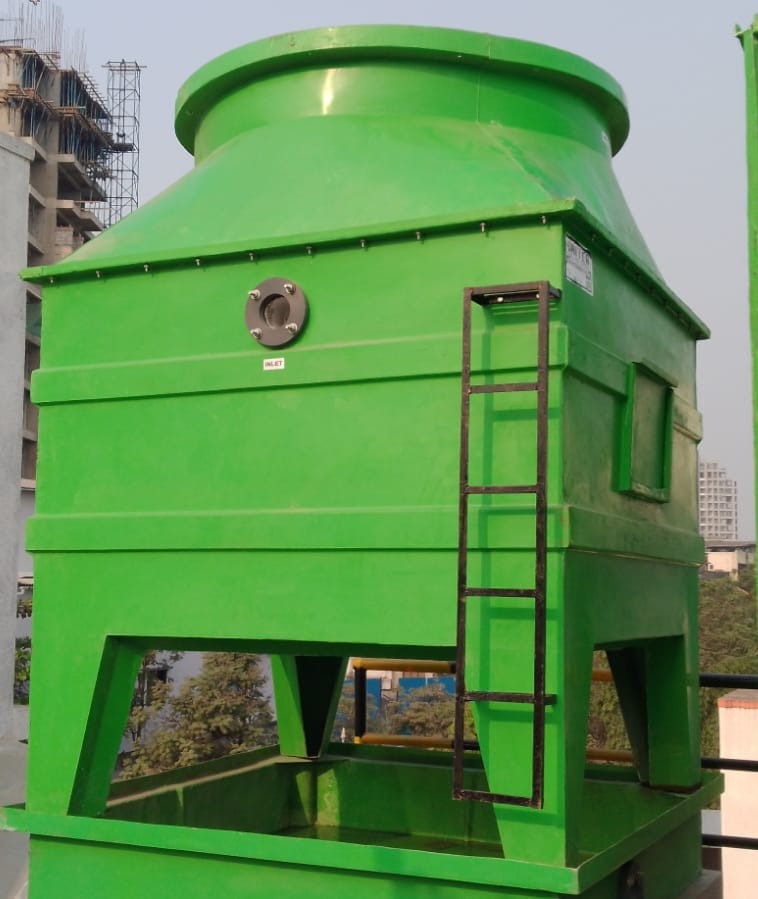
An industrial cooling tower is a large heat rejection system that removes excess heat from water by exposing it to air, often using evaporation. These towers are essential in power plants, factories, refineries, and HVAC systems to prevent overheating and maintain efficiency. 🌡️ What Is an Industrial Cooling Tower? - Definition: A cooling tower is a heat exchange device that rejects waste heat to the atmosphere by cooling a water stream to a lower temperature. - Working Principle: Most industrial towers use evaporative cooling—hot water from equipment is sprayed inside the tower, air flows through, and evaporation removes heat. - Appearance: The tall hyperboloid structures you see near power plants are natural draft cooling towers, often releasing visible water vapor (not smoke). ⚙️ Types of Cooling Towers | | | | | | | | | | | | | | | | | | | | | | | | Sources: 🏭 Applications - Power Generation: Removes heat from steam condensers in thermal and nuclear plants. - Manufacturing: Keeps machinery and chemical processes at safe operating temperatures. - HVAC Systems: Used in large buildings, malls, and data centers to cool air conditioning systems. - Petrochemical & Refining: Essential for cooling process water and equipment. ⚠️ Challenges & Considerations - Water Consumption: Wet cooling towers use significant amounts of water. - Scaling & Corrosion: Minerals in water can damage equipment if not treated. - Environmental Impact: Drift (tiny water droplets) may carry chemicals into the air. - Efficiency: Performance depends on local climate—humid regions reduce effectiveness. 🔑 Key Takeaway Industrial cooling towers are critical infrastructure for heat management, ensuring that power plants, factories, and large buildings operate safely and efficiently. Their design—whether natural draft, mechanical, wet, or dry—depends on scale, climate, and water availability. Would you like me to illustrate the internal structure of a cooling tower (fans, water distribution, fill material, drift eliminators) so you can visualize how all the parts work together?


This is your website preview.
Currently it only shows your basic business info. Start adding relevant business details such as description, images and products or services to gain your customers attention by using Boost 360 android app / iOS App / web portal.
An industrial cooling towe
2025-12-27T05:09:20
An industrial cooling tower is a large heat rejection system that removes excess heat from water by exposing it to air, often using evaporation. These towers are essential in power plants, factories, refineries, and HVAC systems to prevent overheating and maintain efficiency. 🌡️ What Is an Industrial Cooling Tower? - Definition: A cooling tower is a heat exchange device that rejects waste heat to the atmosphere by cooling a water stream to a lower temperature. - Working Principle: Most industrial towers use evaporative cooling—hot water from equipment is sprayed inside the tower, air flows through, and evaporation removes heat. - Appearance: The tall hyperboloid structures you see near power plants are natural draft cooling towers, often releasing visible water vapor (not smoke). ⚙️ Types of Cooling Towers | | | | | | | | | | | | | | | | | | | | | | | | Sources: 🏭 Applications - Power Generation: Removes heat from steam condensers in thermal and nuclear plants. - Manufacturing: Keeps machinery and chemical processes at safe operating temperatures. - HVAC Systems: Used in large buildings, malls, and data centers to cool air conditioning systems. - Petrochemical & Refining: Essential for cooling process water and equipment. ⚠️ Challenges & Considerations - Water Consumption: Wet cooling towers use significant amounts of water. - Scaling & Corrosion: Minerals in water can damage equipment if not treated. - Environmental Impact: Drift (tiny water droplets) may carry chemicals into the air. - Efficiency: Performance depends on local climate—humid regions reduce effectiveness. 🔑 Key Takeaway Industrial cooling towers are critical infrastructure for heat management, ensuring that power plants, factories, and large buildings operate safely and efficiently. Their design—whether natural draft, mechanical, wet, or dry—depends on scale, climate, and water availability. Would you like me to illustrate the internal structure of a cooling tower (fans, water distribution, fill material, drift eliminators) so you can visualize how all the parts work together?
2025-12-27T05:09:20


Submit Your Enquiry